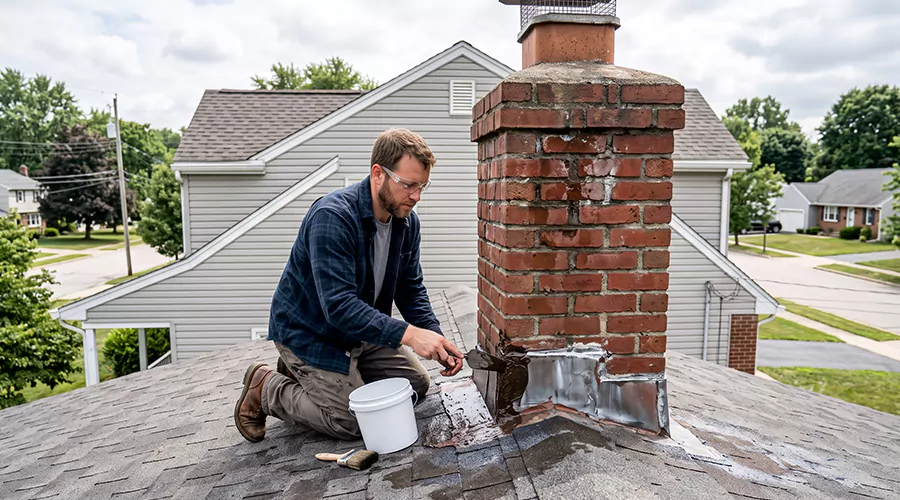
Signs of a Chimney Water Leak
A chimney leak rarely stays contained. Water can travel through masonry, framing, and insulation before stains appear. Early warning signs are easy to miss.




Based on 500+ Reviews

Proudly American
Owned & Operated

A chimney water leak can cause damage that extends far beyond the chimney itself. Moisture entering through the chimney can affect masonry, roofing materials, ceilings, walls, insulation, and fireplace components. Because water does not always appear directly below the source of the leak, identifying the warning signs early is important. Many chimney leaks begin with small problems such as cracked mortar, damaged flashing, or a deteriorating chimney crown. Over time, these issues can allow more water to enter and create larger repair needs.
Knowing the signs of a chimney water leak can help homeowners address the problem before extensive damage occurs.
A chimney has several components designed to keep water outside, including:
When these components become damaged, water can enter through openings and travel into the chimney structure or the home.
Common causes of chimney water leaks include:
One of the most noticeable signs of a chimney leak is water staining near the fireplace or chimney area.
These stains may appear as:
Water stains often indicate that moisture has entered through the chimney structure or roof connection. Because water can travel along framing, insulation, or other materials, the visible stain may not always be directly below the actual leak source.
Moisture around the fireplace can indicate that water is entering through the chimney.
Signs may include:
A fireplace area should normally remain dry. Any unexpected moisture should be investigated.
A chimney water leak can create unpleasant odors caused by trapped moisture.
You may notice:
Moisture can create conditions where mold and mildew develop in surrounding materials.
Odors are especially noticeable when:
White powdery marks on chimney masonry are known as efflorescence. They appear when water moves through brick or mortar and leaves mineral deposits behind as it dries.
Efflorescence may indicate:
While small amounts may not always mean severe damage, repeated white staining can indicate ongoing moisture problems.
Water leaks can weaken the mortar joints between chimney bricks.
Signs of mortar damage include:
When mortar deteriorates, more water can enter the chimney structure, creating a cycle of continued damage. Repairing small masonry problems early can help prevent larger repairs.
Water entering the chimney can cause metal components to rust.
Look for rust on:
Rust may indicate that moisture is reaching areas that should remain dry.
Water from a chimney leak can affect nearby interior surfaces.
Possible signs include:
These problems often appear after moisture has been entering the structure for some time.
The chimney crown protects the top of a masonry chimney from water intrusion. When the crown cracks, water can enter directly into the chimney.
Common signs of crown damage include:
A damaged crown is one of the most common sources of chimney water leaks.
Flashing seals the area where the chimney meets the roof. When flashing fails, water can enter around the chimney base.
Signs of flashing problems include:
Flashing damage should be repaired because continued leaks can affect roofing and interior structures.
The chimney cap prevents rain, debris, and animals from entering through the chimney opening. A damaged cap may allow water to enter from the top.
Signs include:
Replacing a damaged chimney cap can help prevent moisture from entering the chimney.
If water appears inside the fireplace after rainfall, it is a strong indication of a chimney moisture problem.
Possible causes include:
A chimney inspection can help identify where the water is entering.
Spalling occurs when bricks absorb water and begin breaking apart.
Signs include:
Water trapped inside bricks can expand during temperature changes and accelerate deterioration.
A chimney that smells worse after rain may have a moisture problem.
Rainwater can mix with:
This can create strong odors inside the home. A persistent odor after wet weather should be investigated.
Finding the source of a chimney leak can be challenging because water can travel through hidden areas.
Common areas to inspect include:
| Area | Possible Problem |
|---|---|
| Chimney top | Damaged cap or crown |
| Roof connection | Flashing failure |
| Exterior walls | Masonry cracks |
| Chimney interior | Liner or condensation issues |
| Fireplace area | Interior moisture damage |
A professional inspection can help locate the actual entry point.
Ignoring a chimney leak can lead to:
Water damage usually becomes worse over time because moisture continues affecting materials.
Preventive maintenance can reduce the chance of chimney leaks.
Helpful steps include:
Regular maintenance helps protect the chimney from moisture damage.
Yes. Chimney leaks should not be ignored because even small amounts of water can gradually damage the structure.
The repair depends on the cause.
| Problem | Possible Repair |
|---|---|
| Cracked crown | Crown repair |
| Damaged flashing | Flashing repair or replacement |
| Broken chimney cap | Cap replacement |
| Masonry cracks | Brick and mortar repair |
| Water absorption | Waterproofing |
| Liner damage | Liner repair or replacement |
A proper inspection helps determine the correct solution.
Signs of a chimney water leak include water stains, damp fireplace areas, musty odors, cracked masonry, damaged flashing, white stains on bricks, rust, and peeling interior finishes. Chimney leaks often begin with small issues that allow moisture to enter slowly. If left untreated, water can damage masonry, roofing materials, and interior areas of the home.
Regular chimney inspections and timely repairs help identify moisture problems early and protect the chimney system from long-term damage.
Common signs include water stains, damp areas, musty odors, cracked masonry, rust, and peeling paint near the fireplace.
Water may enter through a damaged chimney cap, cracked crown, failed flashing, or damaged masonry.
Yes. Continued moisture from chimney leaks can create conditions where mold and mildew may develop.
Yes. Even small leaks can cause structural damage if they are not repaired.
The solution depends on the source, such as repairing flashing, fixing the crown, replacing the cap, or repairing masonry.
Yes. Water stains often indicate an active moisture problem that should be evaluated.
A chimney leak rarely stays contained. Water can travel through masonry, framing, and insulation before stains appear. Early warning signs are easy to miss.
